Showing posts with label industrial food. Show all posts

Monday, September 9, 2013

The High Cost of Cheap Food: Fast Food Is Made of Corn

What's so bad about making food out of corn? Ask the people who invented it.

If you are what you eat, and especially if you eat industrial food, as 99 percent of Americans do, what you are is "corn."---Michael Pollan, “We Are What We Eat

Corn is petroleum based.

In “Fast Food Nation,” Eric Schlosser traces a hypothetical fast food meal to its origins in a representative cornfield in Iowa. Further probing reveals that the fuel and fertilizers that allow vast monocropped fields of corn to dominate rural landscapes are made from fossil fuels. Modern corn is grown with so many petroleum inputs that we may as well call our diets “petroleum based” rather than “plant based.” Only by applying liberal quantities of fertilizer and pesticides, having fleets of trucks to transport the corn from those remote fields, and using more petrochemicals to disguise its natural flavor and texture, is the industrial food chain capable of transforming rows of maize into the thousands of products lining supermarket shelves across America.

We sure wouldn’t buy more than a ton of corn, per person, per year if we had to figure out what to do with this much corn as a dry commodity. But disguised as everything from cake mix to Value Meals, Americans eat and drink 1500 pounds of corn per person, annually.

Why do we eat so much corn-based “food”?

Corn is a commodity.

One reason is because it’s less expensive than real food. Value Meals exist because of the subsidies we pay farmers to keep them producing commodity crops like corn and soy, which are then turned into a dizzying array of industrial foods. These products aren’t good foods to base your diet on, and particularly not the versions sold today. Michael Pollan, tracing the same route as Schlosser, has concluded that the 2.5 times corn production has increased since the 1970s is the consequence of US farming subsidies---welfare for Big Food---and that all this corn is the cause of an ongoing epidemic of obesity. The exact mechanism is uncertain: whether hyperpalatability simply drives us to eat more calories, or something more sinister---highly processed and possibly dangerous ingredients, irradiation, trans fats, carcinogenic rancid oils, genetically modified foods---is to blame.

Most corn is now genetically modified---patented, and possibly unsafe.

The vast majority of corn grown in the US---88% last year---is genetically modified to resist applications of herbicides and/or pesticides, resulting in increased use of these products. Worldwide, 30% of corn is genetically modified and increasing, a practice that threatens small farmers because of their cost and the aggressive way seed producers “protect” their patents by suing farmers in whose fields GM seed has landed. Legislation in Argentina favoring industrial farming practices represents a threat to subsistence farmers there, in the second largest producer of GM crops after the US, while in Mexico, peasant farmers see the incursion of Monsanto as “looting” the genetic diversity of native seed.

The Wikipedia page on GMOs describes the controversy over foods as one of labeling, and in which accusations of bias have been made against regulators. That the FDA has a “revolving door” at the top has been widely documented; GM seed has not so much been tested as declared not significantly different from hybridized counterparts. And while Monsanto tested their corn as animal feed for only 90 days, longer tests on rats have revealed that Roundup Ready corn causes organ damage in rats.

We could all have pellagra, and not even realize it.

Another danger of eating a diet largely made of industrially produced corn is that the corn is not nixtamalized. Corn requires nixtamalization to be eaten as a staple food because it’s imbalanced as a source of amino acids for human health. The principal storage protein in corn is zein, an imbalanced source of amino acids; the nixtamalization process reduces zein, but this protein is prized by food industry. Corn’s amino acid makeup is low in tryptophan, which is converted to niacin in the liver; niacin is an important B vitamin and potent serum cholesterol reducing nutrient.

Traditional corn nixtamalization is a poorly understood process that makes it possible to use maize as a staple food for humans.

“Nixtamalizing turns the niacin in maize into free niacin, allowing it to be absorbed by the body and preventing niacin depletion. It also reduces mycotoxins. [Link is mine. JC] Minerals are absorbed from the lime---especially calcium---which can be increased by 750%. The protein zein is also reduced, enhancing the balance of amino acids. And of course nixtamalization greatly enhances the taste of the maize. Yes, it’s most certainly worth the effort.” ---Erda Kroft’s blog entry on Nixtamal.
When corn has been grown as a staple crop without the accompanying knowledge of how to correctly process the grain, the result has been outbreaks of pellagra, a disease of niacin deficiency. Native Americans, who created modern maize (it does not self pollinate and is very unlike its nearest native relative, teocinte), also developed the nixtamalization process, in which corn is soaked in an alkaline solution and hulled. Nixtamal, hominy, masa flour, and corn tortillas made from corn processed with lime---all traditional foods---can be eaten regularly without concern.

Corn as it’s used in industrial food, however, and regular corn meal, are not nixtamalized, and this is most of the corn we eat in the US today. Since we’re a corn fed nation once again, it’s worth asking whether we’renewly at risk of pellagra. Is our Fast Food Nation suffering widely from depression, high cholesterol, irritability, weight gain, an inability to concentrate, insomnia, and carb cravings because we’re malnourished?

Image credit: photofarmer/Flickr

Friday, August 30, 2013

The High Cost of Cheap Food

"The High Cost of Cheap Food" is a new series on the hidden costs of feeding a nation---and increasingly, the world---on an unsustainable slurry of scraps and toxins.

1. A fast food diet is an unhealthy diet.

Fast food is not a healthy food choice, to say the very least. As long as we buy our food, cash, and only pay for our health care indirectly, if at all, we will continue to believe that value meals are a bargain and health care is expensive. People buy food on impulse, often when we’re hungry, from companies that indulge our tastes for salt, sugar, and fat. If people shopped for their food as carefully as they do for insurance, or even if the health of our food were as well regulated as insurance, we would all eat better.

For nearly all of us, nearly all of the time, Big Food decides what we eat. They control the market, so that even though it looks like a lot of individuals expressing their freedom to choose, in reality there are not enough differences among the choices, and high quality foods are available in far fewer places. The fast food industry sells us an abundance of food made from cheap, refined, low quality ingredients, like “pink slime” and Coca-Cola, foods that are proven killers. This irregularity of regulation in a country that licenses drivers, pet owners, and hair stylists, is explained by the “Amazing Revolving Door” among industries and the agencies that regulate them.

Fast food does not nourish, because it’s designed to be made from a minimal number of the cheapest ingredients available, by people who’ve received very little training---the better to afford the massive turnover of the fast food industry, which pays a starvation wage to its employees. And neither the government nor the marketplace forces corporations to do a better job of feeding the country.

We as consumers are not the end of the line. Everything works in circles---cycles that provide feedback at every step. The marketplace currently prioritizes cheap food over nourishment, quick meals over Slow Food. The entire model for fast food is unhealthy at every level, and getting worse. The good news is that by demanding freshness, diversity, transparency, and justice from the food systems that serve us, the benefits of healthy eating become not just personal, but social. Making better food choices improves the health of the workers, animals, and ecosystems that nourish us, by creating demand in the marketplace for products that are sustainably raised and harvested, and fairly traded.


Next week: The Leading Causes of Death

Image credit: Νick P/Flickr

Monday, August 5, 2013

How do you want to eat when you grow up?

I grew up eating white bread in the suburbs. 

When my parents got married and had me and my little sister, they were not yet very experienced at feeding themselves. Dad wouldn’t learn how to do much more than simmer water for a baby bottle until our mother went back to work in the early ‘80s, forcing comparisons to “Mr. Mom.” His own father lived his whole life never learning to cook for himself, always catered to by Grandma and before that, no doubt, his own mother.

My mother says her own mother was a lousy cook, and that dinner hours were fraught, plagued by lumpy mashed potatoes and spilled milk. Between them, these two Baby Boomers, our parents, decided that when they had kids and a home of their own, they would make dinner more pleasurable: they would eat what they damn well pleased. No liver. No spinach. And no more lumpy mashed potatoes.


At least one of the problems was that neither one of them had much interest in cooking. My mother was expected to take on the responsibility, so she learned to make a ragu from an Italian girlfriend, and set to burning toast and making too much macaroni and cheese from the box for her new husband for the next decade or two. Christmas morning pancakes came from a Bisquick box. In second grade, my teacher, Mr. Conway, hosted a breakfast potluck in the classroom because he wanted us to taste real maple syrup, only he couldn’t find any. At home, weekday dinners were Shake N’ Bake pork chops or chicken, or a London broil that set off the fire alarm, with sides of boxed au gratin potatoes and frozen broccoli. When I was little, we’d have Jell-O chocolate pudding or gelatin with Cool-Whip for dessert.


My parents only liked a few vegetables---corn, broccoli, green beans, potatoes---and always prepared them in the same few ways. Green beans always came French cut from the can, served cold with a vinaigrette. Salads were composed of iceberg lettuce, cucumbers, and tomatoes, and maybe some carrot shavings, croutons, or fake bacon bits from a shaker.

I didn’t like raw tomatoes as a kid. (I do, now.) I didn’t like a lot of other raw things, because they were served year round, without regard to season. I didn’t know that a ripe Bartlett pear is yellow, not green, and so to wait for it. I didn’t know when to anticipate tomato season.

On first taste, I didn’t like homemade macaroni and cheese, preferring the kind that comes from a box. I preferred cakes made from a mix to those from a bakery, or from scratch. (Who made a cake from scratch? I didn’t even know how. No one I knew made them.) My taste in cheese hasn’t strayed very far from the flavors of my childhood. I still don’t like them very smelly, or with visible mold (and yet Gorgonzoloa remains so trendy), or too tangy. I stick to the soothing textures of ricotta and Cheddar; for dash, a sprinkling of queso fresco, or a grating of Romano.

Someone told me about their childhood of eating only white food: white bread, white pasta, Saltines, chicken breast. I was saved from this fate by other people. Besides the parents of friends and classmates, and teachers eager to broaden my horizons, we went to restaurants where I was allowed to order off the adult menu from an early age, and I had neighbors, and grandparents who liked strong flavors, things like smoked eel, steamer clams, calamari, mashed turnips, and pickles. I associate the smell of sauerbraten with my maternal grandmother’s kitchen. Her parents kept a bowl of mixed nuts in the shell in their parlor, and I always wanted to play with them and eat them: to use the nutcracking tools, or just to sift my hands through the bowl, feeling their smooth and rough shells. My father’s mother made spicy sauces, kept a broad array of charcuterie on hand for snacking with crusty Italian bread, and served a traditional seven seafoods meal on Christmas Eve.

Except on holidays, I never ate turkey, fish, sweet potatoes, or olives. If it wasn’t too much trouble, and was wholesome, my mother might indulge me in odd requests. I asked for spinach after watching “Popeye” and got it, out of a can, with butter. I’m surprised I ever went back to it. (Thank you, saag paneer!) Once I tried prunes, I decided they were a superior version of raisins, and started snacking on them. I was still too young for my peers to tease me about their association with old age.

After school, I would watch syndicated sitcoms and eat American cheese slices folded into quarters, atop Saltine crackers. In the mornings I had cold cereal with milk. School lunches were mystery meat, more bread and milk, granola bars or bakery cookies, ice cream. Sometimes I ate a piece of fruit or some raisins. Treats came wrapped from the store, bought for guests or with allowance money: candy bars, cookies, cakes.

What did you eat when you were a kid, and was it good? Do you still eat like that, or has your diet changed? For better or worse? How do you define “better” or “worse”---is it flavor, convenience, nutrition, or something else?
When I got a job in a supermarket as a teenager, I bought myself other treats: olives, root beer, fried potato sticks (in a can), herbal teas. I was trying new things as well as indulging old comforts, finding out what I liked and who I was, which I thought of as being more or less the same thing. Some of what I tried in my twenties didn’t stick, but a lot of it did.

There are a few foods here and there that I still get the same comfort and enjoyment from as I did---ice cream and cheese are at the top of the list---but for the most part, I eat different foods from what I ate as a child. There are the things I didn’t like and do now, but mostly, there are the foods I wasn’t exposed to very often or at all, that I’ve developed a taste for and now enjoy.

The first time I ever tasted lamb was at a friend’s house when I was eleven. Her mother offered me a platter of cold chops so casually, I didn’t realize that they are expensive. It was delicious, but I mostly forgot about it until many years later, and had the resources to learn to cook lamb at home. Now I can’t remember when I first bought it, but I do remember the one time we bought a whole lamb from a farmer and it was handed over fresh and whole, not frozen and butchered into roasts and chops and ground meat, like we usually get. When we were done, we ate the mysterious breast roast, broiled with salt and pepper, that we had hacked out whole and researched later. I’d get another whole lamb just to have that roast again, the one I can never find in grocery stores.

A platonic boyfriend took me to my first Indian restaurant (my first favorite: saag paneer, spinach with homemade cheese), and then my first Vietnamese restaurants. He had more than one favorite: there was the proud chef with a small restaurant in a strip mall, who served both Vietnamese and French dishes, and then the large place, very popular, where I ate a memorable dessert of red beans over chipped ice. A girlfriend introduced me to Ethiopian cuisine. My first mother-in-law taught me volumes about Southern food. With my full faith in her abilities, she served me the first liver I ever ate. At her table, I’d learned that even okra can be delicious. I am confident that I don’t like liver, as much as it would fit my ideal of myself to enjoy organ meat.

I began to knit together what I knew: the relationships among Greek and Turkish and Italian foods, and in the other direction, Italian and low country French. Why Ethiopian food was so familiar to me, the first time I ate it: because Southern food is in large part African. It happened to me again when I had Nigerian food that reminded me of Cuban, Ecuadorian, and Puerto Rican meals I’ve eaten: yellow rice with peas, fried bananas. When I branch outward culinarily, geographically, from the Mediterranean into the spice blends of north Africa and Asia Minor, I think of India, and trade routes. I learned to make sausage while working a meat counter, and made more connections: the need to preserve meat, the trade routes again---Rome, and the word “botulism,” which derives from the Latin for “sausage”---and the spices that recur: ginger, cinnamon, black pepper, coriander, and the most important of all, salt.

I make my own yogurt, and ginger beer, and pickles: not always, but I know how and can do it, for fun, the ability to customize, or to control the quality. I can make dishes from my childhood that I want to recreate, or make with better quality ingredients than is available in their store-bought alternates---lasagna, beef stew, chocolate pudding---but they’re not the bulk of what I eat. I eat brown rice, beets, pickles, lamb, duck, fresh herbs, arugula... I never ate any of these until I was an adult.

Thanks to market forces, there are foods in the world now that simply didn’t exist in my childhood: innovations in fast food, energy drinks, genetically modified foods. I avoid these in favor of the discoveries I’m still making, in the world of traditional foods I’ve yet to discover or master. I had my first tamales at a high school potluck. A classmate’s mother made them, and I was partway through my second when someone told me that you don’t eat the cornhusks. (That’s how good they were.)

Projects like making sausage, or trying tamales for the first time, or harvesting tomatoes for a pot of sauce, can be learning experiences that lead to more change, or one offs, blips in the stream of your steady diet. Sometimes I have to learn to make something more than once. White sauce was one, for me: a friend taught me to make Alfredo sauce, and then I forgot again, until I learned again to make a cheese sauce for baked mac and cheese. It was worth trying again: like tamales. You risk destroying long-held assumptions, as when I learned from Mark Bittman that one of my old favorites to order in Italian restaurants, shrimp scampi, isn’t an authentic Italian dish: “scampi” means “shrimp.” Losing the magic is a small price, in my book, for gaining the power to make a dish myself.

“Shrimp served in the style of shrimp” is one Bubba missed

What did you eat when you were a kid, and was it good? Do you still eat like that, or has your diet changed? For better or worse? How do you define “better” or “worse”---is it flavor, convenience, nutrition, or something else?

What I eat is what I’m made of, and it’s what I sit down to. I face it, then put it in my face. I identify with the food I eat. My parents got an extra freezer so they could take deliveries from the Schwan’s truck. Our extra freezers are for deliveries from the local farmers who raise our meat, and where we tuck extra servings of farm share vegetables, put up fruit from the u-picks, and keep homemade cookies we bake ahead, and give away at the holidays. I’m proud of what’s in my freezer. Our values are in there.

For some, the image of success is an individual who hardly needs to eat: someone who lives on Red Bull, or salad, or who only eats when it’s elegant and convenient to do so. For others, success equates with hedonic reward: the boss is the one who gets to have whatever he wants for dinner, and dessert, too. Do you still eat the way your parents ate? Do you eat the way other people think you do? Do you eat what you want, when you want it? Do you eat the way you want?

Friday, July 5, 2013

What is food?

Let me ask you: does this look like food to you?

Michael Pollan says to “Eat food. Not too much. Mostly plants.” Yet some non-foods fill the shelves of “health” emporiums and websites. Sites, books, and articles that purport to be about and for good health can’t even get the “food” part of Pollan’s advice right. How do they screw it up so bad?

What is food, anyway? Food isn’t just whatever you can swallow that won’t kill you on the spot. Food is a biological necessity and for humans, it’s a cultural necessity, as well. Everybody eats. And before the advent of industrial “food,” everybody ate food. It was as easy as that. Now, we have to trace our food back to its origins to be sure it is 100% food.

Food is necessary to life, and food is made from living matter. Pollan says to eat “mostly plants.” Besides plants, there are fungi and animals we can eat. The other substances we must ingest regularly to survive are water, sodium chloride (sea salt), and sunshine (or vitamin D). Everything we need to live can come from a diet of living things in our environment: this is what we have always eaten, for more than a million years.

Today’s industrial diet includes multivitamins, energy drinks, and countless foods containing chemical flavors, colors, and preservatives. The very plants and animals in these foods may be genetically modified organisms, or raised on them. Corn, soy, and other animal feeds are among the most common GMOs on the market, and GM salmon is being considered for approval for the US market. Some foods are irradiated, including fresh meat, seafood, eggs, and produce, sprouting seeds, and spices. The US government does not require labeling for GMOs. It does require labeling for irradiated food; the US label for irradiated food is called a “Radura symbol,” and looks like this:

Radura: see "Healthwashing", "Greenwashing"

Vitamin pills include synthetic versions of naturally occurring elements, that are not identical to the natural forms: they are isomer, or mirror images, of the naturally occurring versions. Close, but not so close that the body does not treat them differently, or that they do not have a negative effect on the body when they are incorporated as if they were the real thing. Doctors selling expensive vitamin supplements will happily explain some of the toxic synthetics that they do not use in their pills. Naturally Occurring Standards for vitamins are being proposed by the Organic Consumers Organization.

But supplements aren’t just in pills: this post from The Healthy Home Economist contains info on the dangers of cheap synthetic vitamins added to nut milks. Check for yourself to see if your fortified breakfast cereals, energy bars and drinks, and dietary supplements use these toxic versions of nutrients. Niacin, riboflavin, ascorbic acid, and other common nutrients are synthetic, and not identical to their naturally occurring counterparts.

Activists have been increasingly noting how industrial food and the pharmaceutical industry are becoming less distinct from one another. Carlos Monteiros, writing for the World Public Health Nutrition Association website on industrial food that makes health claims, notes: “In 2010 Tang delivered 20 billion servings in 90 countries. It is very profitable, at 37 per cent, the kind of return usually associated with successful pharmaceuticals.”

With one hand, Kraft Foods and other giant food manufacturers sell us “health foods” like Tang that are secretly toxic, and with another hand that is twice as large, Kraft sells us snack foods that we know are bad for us, but we eat anyway. We think we’re being good when we drink our Tang (or Red Bull, or Slim Fast, or Vitamin Water), but we’re actually drinking poisonous chemical slurries to wash down the rancid, genetically modified, refined products we call “fast food” or snacks. None of this is food, and it’s not simply unhealthy: it’s killing us.

What are the health risks of eating such a diet? Cancer, heart disease, stroke, diabetes... the big killers are industrial foods. And who stands to benefit when the majority of people have nothing else to eat but food that causes disease? Other than food manufacturers, it’s pharmaceutical companies who stand to profit from our misery. Which brings us to another category of non-food: antibiotics.

The word “antibiotic” means “against life.” Antibiotics kill other living things. We use them medicinally to kill bacteria that cause disease. But when they’re used broadly, they breed resistance into the organisms that harm us. Despite the long term implications, farmers continue to use broad spectrum antibiotics and give them routinely to all their livestock, whether they’re healthy or sick, to prevent illness and increase the size of their animals. A short term side effect of antibiotic use in this fashion is that it makes the animals bigger when they don’t devote any resources to fighting infection. The same appears to be true of plants that are routinely sprayed with pesticides. Though we have won regulation for organically raised plants, the USDA has given up on restricting antibiotic use in livestock, leaving it up to the consumer to seek out meat, fish, and dairy that haven’t been fed antibiotics.

Food is made from living things. To be healthy, eat a life based diet. Consider foods from the sea, dark leafy greens, fats, cultured foods, and other fresh foods that are highly nutrient dense as alternatives to your multivitamins and energy drinks, and for breakfast and snacks, the meals we most often eat from packages. Work a little for your food. Know what you’re eating. And keep looking for alternatives to the industrial diet. Maybe you don’t think you like anchovies and kale yet (Kale, Caesar!) But how could anything taste worse than Red Bull?


Image credit: stevendepolo/Flickr

Friday, December 9, 2011

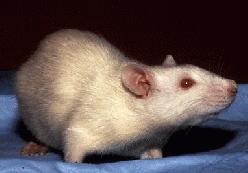
Do you eat like a lab rat?


Like you, Rattus norvegicus enjoys snack cakes


Are you living the rat race? If you labor alone, yet have little privacy, find your work unrewarding, and your lifestyle stressful, get little exercise, fresh air, or fresh food, and find your weight is also slowly climbing, you might be living like a lab rat.

Rattus norvegicus 101

Rats are not mice, and mice are not men. Lab rats are larger than their wild relations, and much larger than house mice. Wistar rats, one of the most common lab rats, weigh 300-500 grams on average as adults, depending on their sex. By comparison, a typical house mouse weighs only 10-25 grams.

Lab rats live in boring, confined, sedentary, lonely conditions, where food is the only constantly available reward. In controlled studies on diet, standard lab rats are typically fed ad libitum, or free-fed, on a standard rat chow. Under these conditions, rats steadily gain weight.

In a fifteen-week study on the so-called “cafeteria diet,”[1] rats fed ad libitum on standard chow gained almost their entire starting weight, from an average starting weight of 300 grams to over 550 grams (see Fig 1e).  

Rats living in the wild are rarely found weighing over 500 grams. The weight gain of lab rats on fairly boring, but unlimited diets is the baseline effect of living like a lab rat. So what happens if you switch to a low-fat formula?

Messing with the formula

Rats fed either a high-fat chow (HFC), or a low-fat/added sugar chow (LFC), both gained weight more quickly than the rats fed a standard formula (SC). You can see by the graph that, while both the high-fat and low-fat fed rats gained more weight on average, the tight clusters in the chart spread out noticeably on both of these modified feeds. This means that there was more variation among individual rats in their response to being switched from standard chow to a new formula. The new formula was either higher in fat or in sugar, suggesting higher palatability.

Those eating the LFD ate the most sugar, even more than rats with unlimited access to snack foods. The researchers also noted that the rats initially eat more of the new food, but by week two, their consumption declines to a level of mild overeating that remains steady through the remainder of the study.

What is the “cafeteria diet”?

But this study wasn’t just on what happens when you change the standard chow. The real test group in this study were those receiving what the researchers call a “cafeteria diet” (CAF). This group of rats got standard rat chow, ad libitum. They also had snack foods, more than they could possibly consume. Three different kinds of snacks, rotated for variety (a full list of the snacks, which included items such as wedding cake and Doritos, is here), were available each day in large quantities. As the researchers write, “this diet engages hedonic feeding.”

The rats in the CAF group naturally disdained most of their standard chow in favor of the tastier snack foods. They ate markedly more food than any of the other rats, and continued doing so even after the two modified-feed groups (HFC and LFC) adjusted their food intake after the second week. Those eating the CAF diet of standard chow plus snack foods continued to eat about half again as much food by weight as those on standard chow alone, and gained weight at about twice the rate. That’s some energy-dense food. These were the heaviest rats at the end of the fifteen weeks, averaging around 750 grams: two and half times their starting weight, and half again as big as the largest wild rats.

What happens when you put humans on a cafeteria diet?

Human volunteers—lean, adult men—allowed to eat whatever they wanted from refrigerated vending machines overate by about 50-60%, just like the rats. The resulting weight gain was about five pounds for each of the volunteers in a one-week study. [2]

As in the rat study, the humans were confined, had few opportunities for recreation, and were constantly observed. The rats, like the humans, were confined in pairs. The humans typically ate alone; no mention is made of the social dining habits of lab rats.

The food that they ate was not exactly the same. While the so-called cafeteria diet that the rats were placed on in the Obesity study was made up of standard rat chow plus an abundance of snack foods, the humans were not offered any kind of standard human chow: no rice, kale, and beans or poached chicken breasts over green salad; no meal replacement bars. Instead, they got all of their food from a set of refrigerated vending machines, stocked with commercially prepared foods. A full list is included in Table 1 of the 1992 American Journal of Clinical Nutrition study: note that the only fresh fruit or vegetable the human volunteers got all week was apples. The foods available were items such as white bread and chicken pie, as well as rat-approved snack foods like cake and Doritos. There were no green vegetables in any of the meals, and very few vegetables or fruits in any form.

Of rats and men

Among the differences between the human and rat studies above, the first, of course, is that humans are not rats. The second is that there was no standard chow available to the humans, only hyperpalatable food, while the rats had access to both. The third is the duration of the study.

Presumably, humans will also adjust to their diets, even if they are eating from vending machines. No one could maintain a lifestyle in which they gained five pounds a week for very long: that’s a hundred and ten pounds a year. Since it’s so difficult to get human volunteers to agree to longer studies, it hasn’t been well documented whether laboratory humans will make the second week adjustment the same way that laboratory rats do.

What’s the difference between your rat race and a rat’s?

Studies on the so-called cafeteria diet are really on the effects of food deserts and the stress of confinement. When all we have is food to reward us in our dingy, artificially-lit cubicles, we gain weight and overeat. Switching from standard commercial fare to a low-fat version, or even to a high-fat version, doesn’t help matters. And when we have really sweet and fatty food as our only reward in life, we eat even more of it.

Humans can insert consciousness, as my therapist likes to say. We can examine our motivations for eating out of pleasure or emotion rather than hunger, and decide whether to proceed or not. Whether to pull the emotional lever. Rats can’t do that. They will go for it, every time.

You can get out of your maze. Your food doesn’t have to come out of vending machines. Your only food options are not chain restaurants and commercial packaged foods, with the odd highly-shippable iceberg lettuce wedge or conventionally grown apple thrown in as a concession to health.  You can cook your own food from fresh ingredients. You can exercise and seek out other stimulating activities that engage your hedonic circuits.

You are not a rat, and you are not trapped.

Tuesday, August 16, 2011

Nutritionism: a fabrication of the Industrial Age

When Spaniards brought maize to the Old World, they failed to import the traditional wisdom for processing the corn to make the niacin bioavailable. Wherever corn consumption spread in Europe, a disease called pellagra became endemic. Hundreds of years later, when the cause of the condition was proven by Western science, instead of using the ancient method of nixtamalization to process corn meal, niacin was added.

The way nutrients were first discovered was through industrial food. White rice, flour, and sugar started off as luxury goods. They were “refined” in both senses of the word: undesirable matter was discarded, and the resulting product was smoother and more appealing. At first only the rich could afford them, but as demand grew for the refined foods, scale of production increased and prices dropped. When these industrial foods were produced on a large enough scale that everyone could afford them, they became so cheap that they became staples of the very poor. And that is when we started to see how poor these new foods really were, because people who lived on them developed diseases of malnutrition.

Diseases of malnutrition don't always have very obvious signs, so it took a while for scientists to piece together the clues. When people living on white rice developed a range of symptoms, including difficulty walking, sufferers called it “beriberi.” The condition was cured with thiamin, which is found in rice bran, but which is removed from white rice. White rice was adopted by industry because it stores for longer periods than brown rice, so instead of switching people back to brown rice, with its shorter shelf life and lower profit margin (corporations make money by "adding value," i.e. processing, to raw ingredients), they solved the problem more cheaply and profitably ("Now with thiamin!") by fortifying white rice with thiamin.

And so it went, learning from one mistake after another, and then finally through concentrated study, what parts make up food, their functions in the body, what in food can be dangerous, and how much and what kinds are needed for health. "Nutritionism" is the belief that our need for food can be deconstructed into a finite number of irreducible and replicable substances called “nutrients,” which may be assembled in any order convenient for manufacture. For many years now, ready-to-eat breakfast cereals have been supplemented with vitamins and minerals, justified by the tenets of nutritionism. The additives in Captain Crunch are typical: niacinamide, reduced iron, zinc oxide, thiamin mononitrate, pyridoxine hydrochloride, riboflavin and folic acid. Many are in forms chemically distinct from the forms found in food, and in some cases, we even know that the body doesn’t use the synthetic, supplementary nutrient in the same way as when these nutrients are found in our food.

Under nutritionism, any compound in a food can be isolated, separated, and either concentrated as a nutrient (i.e. soy protein isolate) or discarded as undesirable (i.e. fat-free milk). Which nutrients we value, and which we abhor, change like trends in politics and skirt lengths. Fiber wasn't valued by those who refined rice, considering it an inefficiency in getting enough energy in one's diet, but today it's added to foods as a supplement. In the 1980s, everyone feared fat and dieters ate big plates of pasta and baked potatoes. Since then, the tide has completely turned on carbohydrates, while we retain fear of both fat and calories. It creates anxiety around food to be afraid of most macronutrients, a fear that industry nurtures and is glad to assuage with their highly processed offerings.

The ultimate faith act in nutritionism is to attempt to live on nothing but industrial meal replacement. But to do so would be folly: the evidence suggests that industrial food is causing a whole new set of diseases today, from diabetes to cancer. The pace of change in our diets has grown exponentially: so quickly that we can’t even reliably look to our oldest living relatives for a model of a sustainable diet. Nutritionism sells peace of mind, with their certainty that science has just unlocked the nutrient you need to add to your shopping cart.

We won’t find the answers to our health care crisis in the industrial model, because the machines of capitalism don't back up: they can only plow forward, doing what machines do, which is make more products to sell. Just as industry's answer to beriberi is fortified, sugar-sweetened, chemically preserved grain flour, they have an answer equally appetizing and easy to manufacture for heart disease, breast cancer, or diabetes. They'll even sell you food for obesity. As Michael Pollan points out in his famous essay, “Unhappy Meals,” the fact that an industrial food product has a label and makes health claims should make it suspect. It's a product first, not a food.

What we know about nutrition may be wrong, and is certainly incomplete. However, we know a great deal about food.

So: Eat food.
The rest is commentary.

Friday, July 22, 2011

Food (in)security

“Food security” is one of those buzzwords organizations throw around when they’re fishing for grant money. Now that I think about it, I might even go fishing, myself, because one of the most important ways that I flex my giant humanitarian love is by teaching people how to become more food secure.

“Food security” means different things, depending on your perspective. The average policy wonk thinks “food security,” and immediately starts thinking infrastructure, cash crops, and preventing terrorists from taking pictures of feedlot cows. Your locality might be concerned with its food deserts, and their costs to the state. And your own idea of food security might be to wonder what there is to eat within delivery range.

If you rely on industry to serve your food needs, you are less food secure than if you can feed yourself from alternate sources. This means finding your food in the places that aren’t represented on government food locator maps: farmer’s markets, your own garden, the woods. It means genuine freedom of choice among actual foods suitable for human consumption, not from a dozen varieties of the same ultraprocessed product. It means drawing on a personal encyclopedia of knowledge and experience in recognizing foods, wherever they are, and knowing their qualities: what they taste like, how satisfying they are, how to cook them. It means valuing the rituals of preparing and enjoying food with others, not just the numbers on the side of the package.

By contrast, the American standard is eating the meal that is served to you, in restaurants that rely on deliveries of frozen provisions. It’s supermarkets, the one place where even food desert denizens know they can go for real food, are mostly full of pre-packaged, highly processed food products. Even evidently natural foods have no seasonal availability, or provenance. Milk is pasteurized, meat is stripped of recognizable animal origins. Squeamishness, fear, and ignorance are encouraged: industrial food promises to be free of dirt, raw flesh, and microbes. This is the food of denial: denial of ordinary human desires, of our connections to the Earth through what we eat, of the importance of quality food to our well-being, of the differences between food produced in harmony with nature and food that strenuously opposes nature. This is how American food insecurity starts.

People who are insecure will cling to the mob. It makes a certain kind of sense: in our confusion, we think, “all those people can’t all be wrong.” But sometimes, they are. Sometimes the landscape is controlled by forces too large for the mind’s eye to encompass. Consider the food desert, and why it is a pernicious environment. When all you see are a certain, limited range of choices, wherever you go in your daily travels, day after day, it eventually limits what you think of as your choices. After all, this is your actual, imperfect, modern life, not a stock image of breezy, healthy living. This is where you live, and these are the only things you see to eat. If you live in a food desert, all you see are unhealthy choices, but they’re normalized. Eventually, you believe things that allow you to make the same, poor choices: that this is how other people in my situation eat, it’s all I can afford, all I can drive to, and that it’s not so bad. Defenders of bad food are technically correct when they claim that people are free to eat what they want, and that they should be allowed to choose good food or bad. The danger of the food desert is in growing to accept its offerings.

It takes conviction and sustained effort to break away and do things differently. You have to have confidence in what you’re doing and why, to buy vegetables you’ve never eaten before, to go out of your way to buy food, to be the only one who brings a boxed lunch to work every day instead of going out. And it has to be rewarding to live like that: not only do you have to like this new image of yourself, but you have think the extra effort is worth it.

Most importantly, you have to like the taste of your own cooking. The very last thing I would ever lie to you about is whether something tastes good to me. I care about gustatory pleasure, and do not waste my time eating things I don’t like. I don’t like beets or beef liver, so I don’t eat those things, and that’s okay. If you like them, you should totally eat them, because they’re really good for you, but it’s not worth it to choke down disgusting food.

If you want to learn to enjoy real food, I can help you with that. The first step to enjoying natural foods is to wean yourself from industrial food. The salt, sugar, and chemicals mask toxic elements, off flavors, and even rancid oils, in industrial foods, drugging you instead of supplying a genuine food experience. When you get away from the cycle of craving and release, and you can begin to appreciate the foods people have eaten and enjoyed for thousands of years. You’ll finally be able to clearly understand what your body knows about what you’ve eaten and what you need.

Real food is your birthright as a human being.

If we don’t take a revolutionary step in favor of embracing our animal selves, rather than denying ourselves and trying to fake ourselves out, we stand to join the stampeding mob into what amounts to the shittiest virtual reality that industry can manufacture. Too many of us have surrendered already, choosing “Farmville” over u-pick tomatoes, Wii Bowling over rental shoes, and “chocolate pudding” flavored soy protein isolate meal replacement bars over meat and pudding.

Don’t do it anymore. Don’t volunteer for “The Matrix.” I swear, the food is much, much better out here.